The Internet of Things, or IoT, refers to the billions of physical devices around the world that are now connected to the internet, all collecting and sharing data. Thanks to the arrival of super-cheap computer chips and the ubiquity of wireless networks, it's possible to turn anything, from something as small as a pill to something as big as an aeroplane , into a part of the IoT. Connecting up all these different objects and adding sensors to them adds a level of digital intelligence to devices that would be otherwise dumb, enabling them to communicate real-time data without involving a human being. The Internet of Things is making the fabric of the world around us even smarter and more responsive, merging the digital and physical universes.
How big is the Internet of Things?
Big and getting bigger -- there are already more connected things than people in the world.
Tech analyst company IDC predicts that in total there will be 41.6 billion connected IoT devices by 2025, or "things." It also suggests industrial and automotive equipment represent the largest opportunity of connected "things,", but it also sees strong adoption of smart home and wearable devices in the near term.
Another tech analyst, Gartner, predicts that the enterprise and automotive sectors will account for 5.8 billion devices this year, up almost a quarter on 2019. Utilities will be the highest user of IoT, thanks to the continuing rollout of smart meters. Security devices, in the form of intruder detection and web cameras will be the second biggest use of IoT devices. Building automation – like connected lighting – will be the fastest growing sector, followed by automotive (connected cars) and healthcare (monitoring of chronic conditions).
What are the benefits of the Internet of Things for business?
The benefits of the IoT for business depend on the particular implementation; agility and efficiency are usually top considerations. The idea is that enterprises should have access to more data about their own products and their own internal systems, and a greater ability to make changes as a result.
The Internet of Things and smart cities
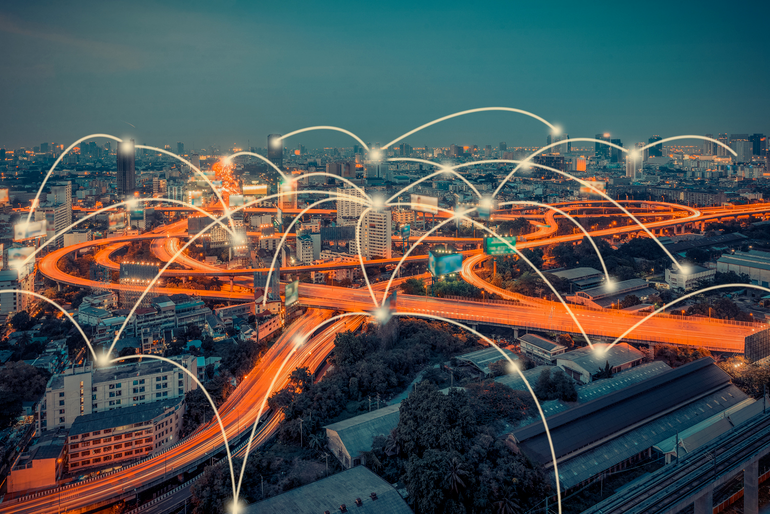
By spreading a vast number of sensors over a town or city, planners can get a better idea of what's really happening, in real time. As a result, smart cities projects are a key feature of the IoT. Cities already generate large amounts of data (from security cameras and environmental sensors) and already contain big infrastructure networks (like those controlling traffic lights). IoT projects aim to connect these up, and then add further intelligence into the system.
The ability to better understand how a city is functioning should allow planners to make changes and monitor how this improves residents' lives.
Where does the Internet of Things go next?
As the price of sensors and communications continue to drop, it becomes cost-effective to add more devices to the IoT – even if in some cases there's little obvious benefit to consumers. Deployments are at an early stage; most companies that are engaging with the IoT are at the trial stage right now, largely because the necessary technology – sensor technology, 5G and machine-learning powered analytics – are still themselves at a reasonably early stage of development. There are many competing platforms and standards and many different vendors, from device makers to software companies to network operators, want a slice of the pie. It's still not clear which of those will win out. But without standards, and with security an ongoing issue, we are likely to see some more big IoT security mishaps in the next few years.
As the number of connected devices continues to rise, our living and working environments will become filled with smart products – assuming we are willing to accept the security and privacy trade-offs. Some will welcome the new era of smart things. Others will pine for the days when a chair was simply a chair.